|
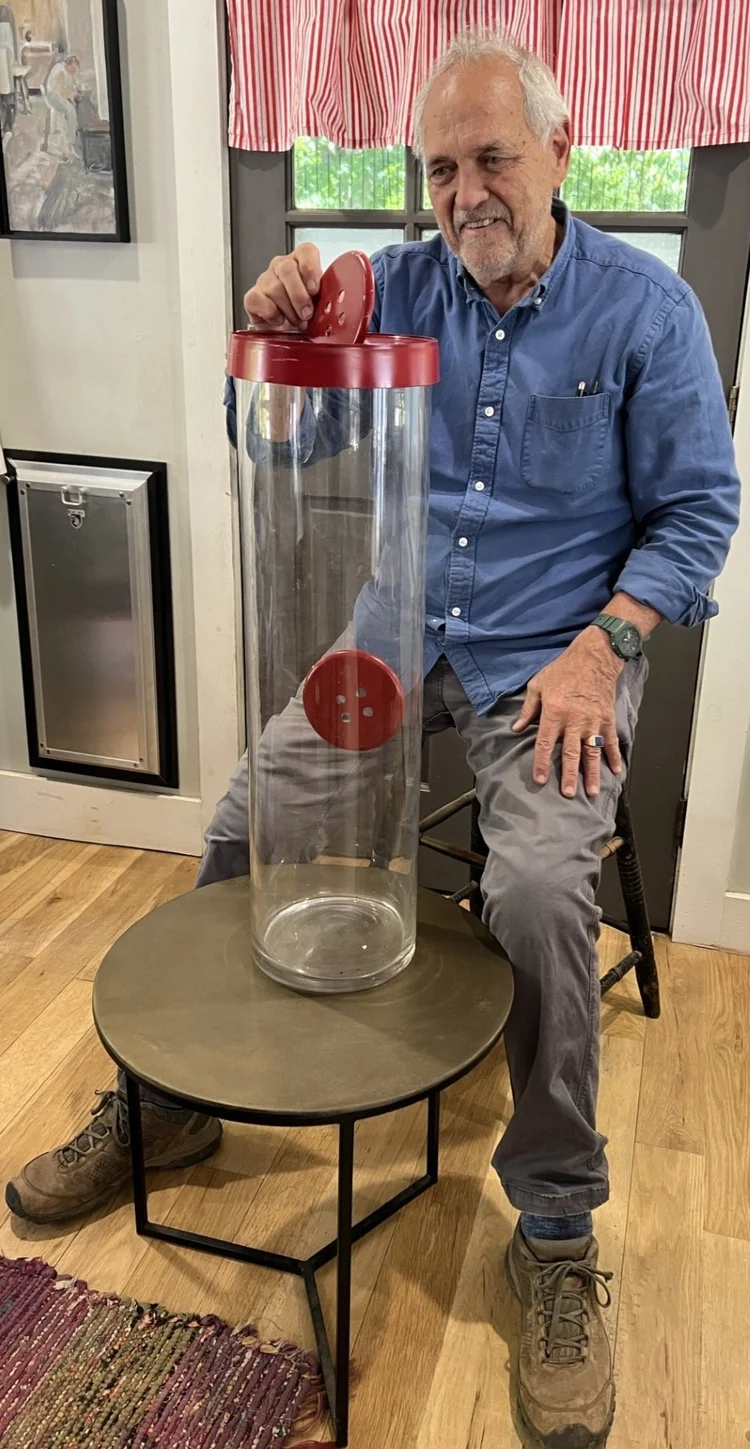
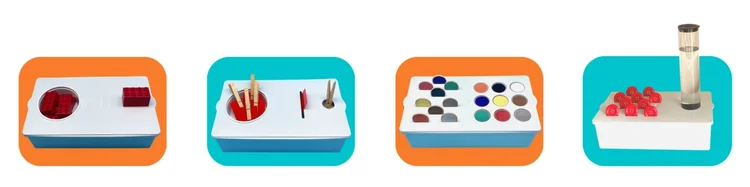
It was during a TEACCH training session in Texas in the mid 90’s when Red Buttons in Water came into being… On one particular day of assessment, a younger student, with whom one of the trainers was working, showed no interest in the activities presented to him. He simply turned away and refused to do anything. Knowing that no one has the single answer to all the challenges that will present themselves at these trainings, as a TEACCH team, we all help each other. We looked at this student’s reported interests and found that although there didn’t seem to be many, one particular interest was water. As I looked over the raw materials table, with this information in mind, an idea occurred to me. I saw an empty plastic tennis ball container with lid plus an assortment of buttons. I used an empty cardboard shoebox, taping the cover on, and turned it upside down. I then cut 10 slits on one side of the inverted shoebox to accommodate 10 buttons placed upright and I cut a hole big enough to accommodate the tennis ball container on the other side. I cut a slit in the tube’s lid, big enough for a button to pass through and filled the tube with water before securing it in the shoebox opening. Buttons were dropped through the lid. They floated down the tube and disappeared beneath the surface of the box. I liked the effect, but would the student? His trainer placed the button activity before him and demonstrated by taking one button and placing it into the slot of the tube. The student (whom I’ll call Jon) watched intensely as the button floated down, trying to see where it went when it disappeared beneath the surface of the box. Jon then wanted to do one on his own and quickly went through the remaining 9 buttons, showing great interest. When he asked to do the button activity again, the trainer saw his opportunity to introduce another activity of lesser interest. He kept the button activity in sight but out of reach and placed a task before Jon that he had previously refused. The trainer, by gesturing and saying, “first this, and then, buttons”, made it clear to Jon (who was non-verbal) that once he did the activity in front of him, he would then get to do the buttons again. This worked beautifully and over the next four days Jon progressed to completing three or four activities before doing his favorite one, red buttons in water.
|